
HWPL Successfully Concludes the 2nd Pacific Nuclear Legacy Human Rights Webinar

“Nuclear Records as Global Heritage”: Discussing the Preservation of Peace Legacy through Scientific Data and Collective Memory
Heavenly Culture, World Peace, Restoration of Light (HWPL) held the 2nd Pacific Nuclear Legacy Human Rights Webinar online on May 9 under the theme “Nuclear Records as Global Heritage: Securing Peace in a Changing Climate.”
The webinar was organized as a follow-up discussion to the first Human Rights Webinar, “Nuclear Legacy: Enduring Impacts in a Changing Climate,” held on February 28. While the first webinar highlighted the impacts of nuclear testing in the Marshall Islands as an ongoing human rights, environmental, and security concern, the second webinar discussed how records, testimonies, and community memories of Pacific nuclear testing can be recognized as global heritage and preserved as a peace legacy for future generations.
The event brought together legal, civil society, religious, educational, media, and youth representatives from various regions, including Fiji, Belgium, Zambia, Malawi, and South Korea, to share the significance of preserving nuclear records and the need for international cooperation
.
In his congratulatory remarks, the Honorable Thushara Rajasinghe, High Court Judge of the Judiciary of the Republic of Fiji, emphasized that “nuclear records are more than just historical documents,” describing them as “powerful testimonies of human suffering, resilience, and the urgent need to prevent future nuclear devastation.” Mr. Andy Vermaut, Founder of Fundamental Rights Organization PostVersa in Belgium, stated that climate change and rising sea levels are threatening the evidence and memory of nuclear testing, adding that declaring nuclear records as global heritage means refusing “to let the truth sink beneath the waves.”
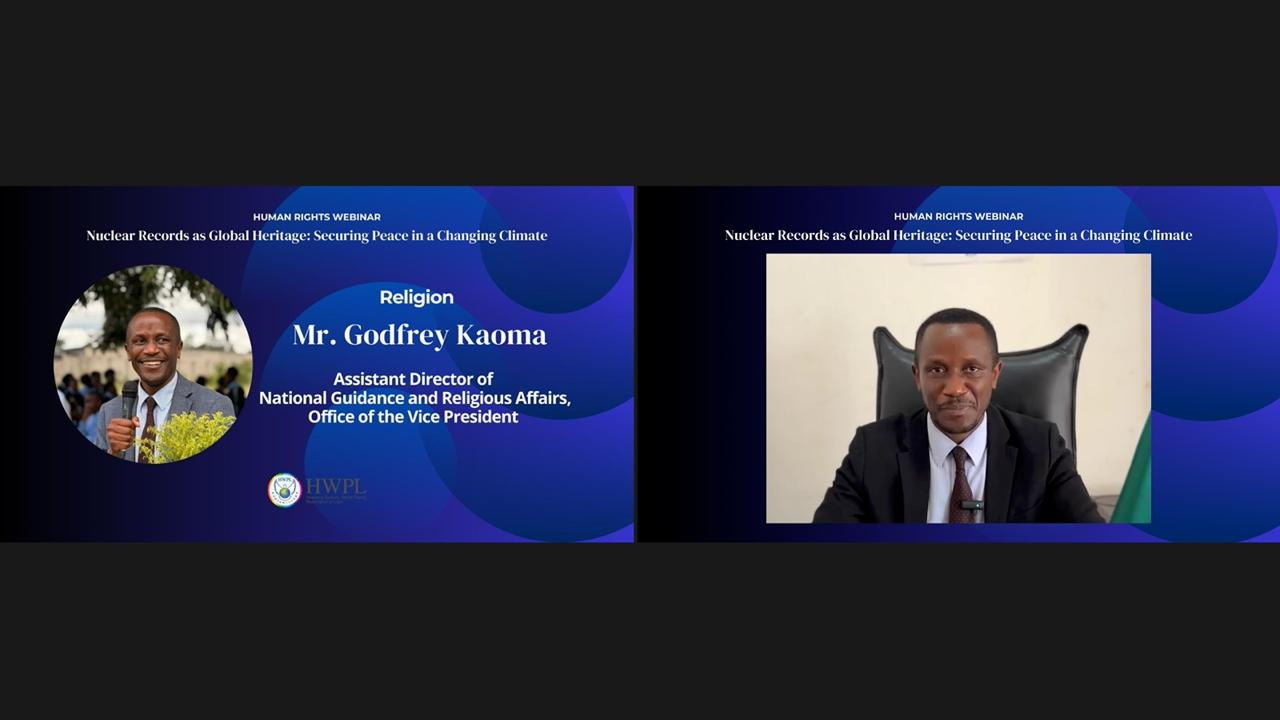
The first session discussed the roles of civil society, religious communities, educators, and the media in preserving records and memory. Mr. Godfrey Kaoma, Assistant Director of National Guidance and Religious Affairs under the Office of the Vice President of Zambia, said, “Truth is preserved not only through written records, but also through lived testimony and spiritual teachings,” emphasizing that preserving records is not only about the past, but a responsibility for future generations.
Mr. Olaf Sanga, Head Teacher of Njamba Secondary School in Malawi, spoke about the importance of addressing nuclear legacy in education, saying that “students should know how human desire for advancement and power can destroy the earth.” Mr. Andrew Junior Mwima, a youth representative from Zambia, said, “To my generation, the word ‘heritage’ usually sounds like a museum, but when we talk about the Pacific Nuclear Legacy, heritage isn’t a museum; it’s a crime scene that hasn’t been fully cleaned up.” He emphasized that the younger generation seeks peace not through silence, but through accountability.
Mr. Ousman Kaliati, a journalist from Times Group in Malawi, addressed the role of the media, stating that journalists have a responsibility to disseminate information on global issues such as nuclear legacy. He noted that while reporting can sometimes escalate conflict, it can also shed light on the realities of affected regions and help call for necessary support.
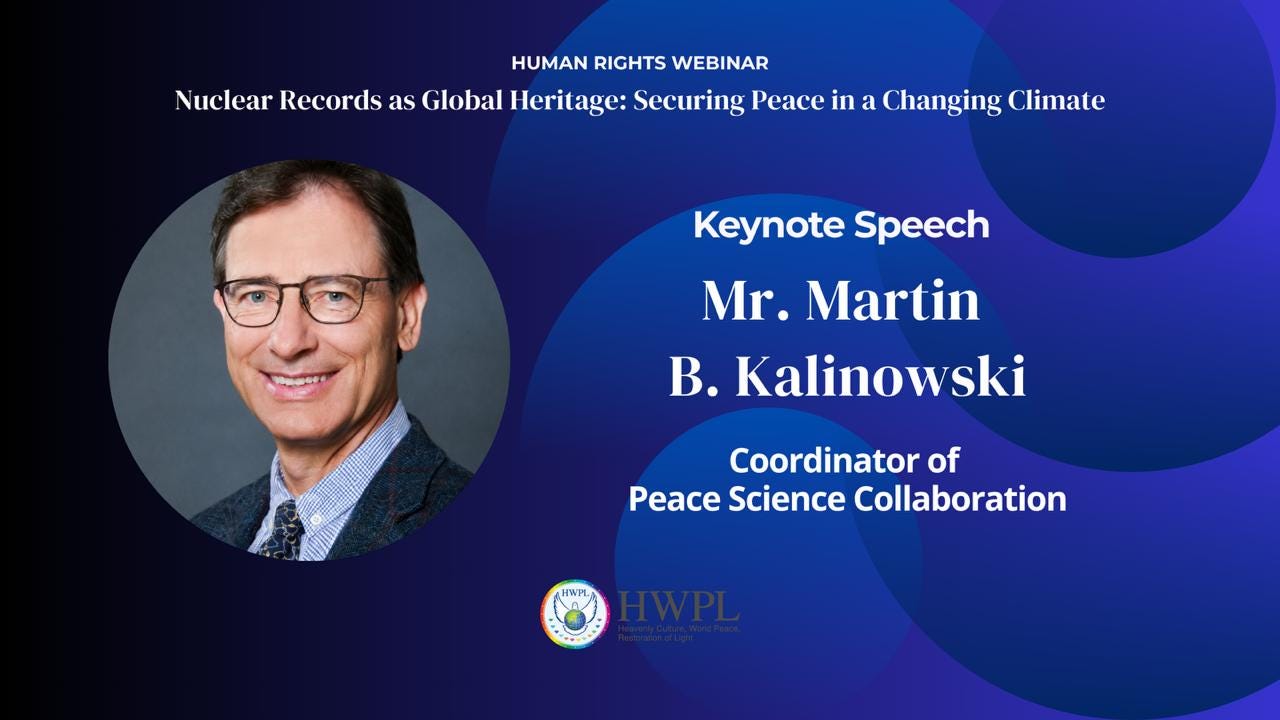
In the second session, Mr. Martin B. Kalinowski, Coordinator of Peace Science Collaboration and former official of the Comprehensive Nuclear-Test-Ban Treaty Organization (CTBTO), delivered a presentation titled “Data from Past Nuclear Tests.” He explained that more than 2,000 nuclear tests have been conducted worldwide since 1945, with large-scale atmospheric nuclear tests concentrated particularly in the Pacific region. He also stressed that the impacts of nuclear testing are not limited to health consequences, but also include forced displacement, economic losses, psychological trauma, and other social consequences. He highlighted the importance of independent scientific analysis and the use of modern data in achieving justice for affected communities.
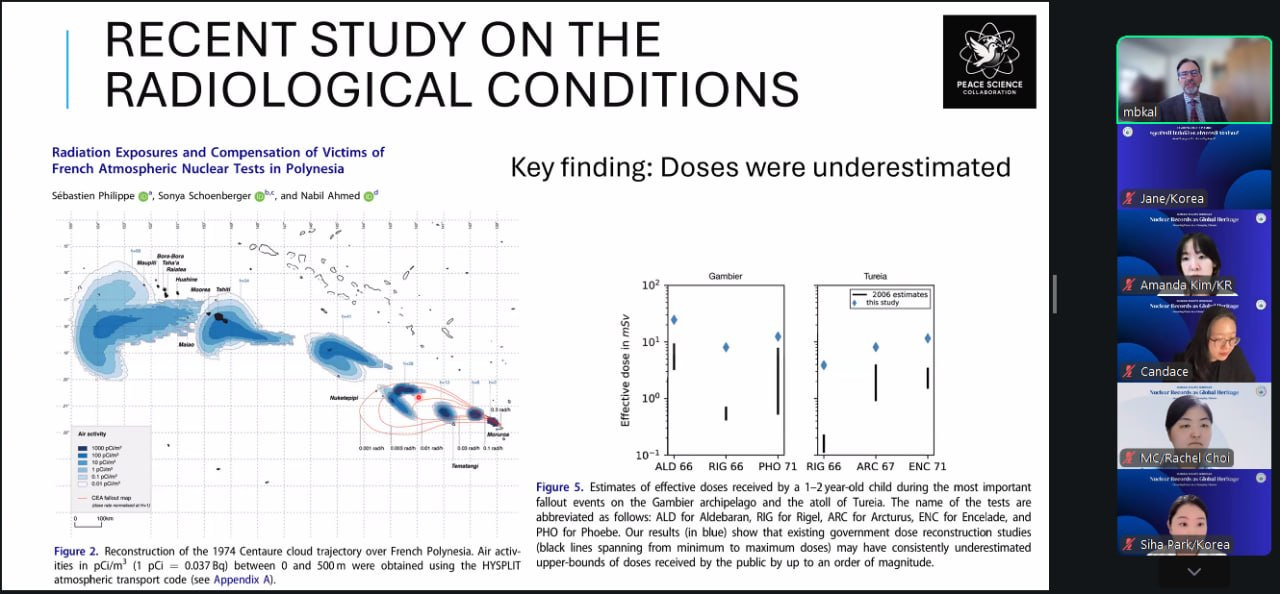
As areas for collaborative action, Kalinowski proposed the entry into force of the Comprehensive Nuclear-Test-Ban Treaty (CTBT) to ban nuclear testing, the preservation of nuclear testing memory at both international and local levels, and the need for a “co-expertise process,” through which affected communities and experts can work together to understand and manage radiation risks. In his closing remarks, he said he was impressed that participants did not close their eyes to the issue, but sought to raise awareness. Mr. Harrison Phiri, Station Manager of Radio Delight Kwitonta in Zambia, shared that the webinar helped him realize that individuals can also contribute to peace by supporting the digital archiving of nuclear records and preserving photos and oral histories.
Through this webinar, HWPL seeks to transform the records and testimonies of nuclear testing harm in the Pacific into educational and peaceful assets, in line with Article 10 of the Declaration of Peace and Cessation of War (DPCW), which emphasizes the spreading of a culture of peace. By doing so, HWPL aims to contribute to preserving historical truth, preventing the suffering caused by nuclear testing from being forgotten or repeated, and establishing a peace legacy that protects the rights and safety of future generations.
HWPL is an international peace NGO working with partners in civil society, education, youth, women, religious communities, media, and various other sectors around the world to promote peace education, interfaith dialogue, and the spread of a culture of peace. Based on the DPCW, HWPL continues its efforts to strengthen international cooperation for peace and the protection of future generations.